What is HACCP? How can a restaurant kitchen apply it?
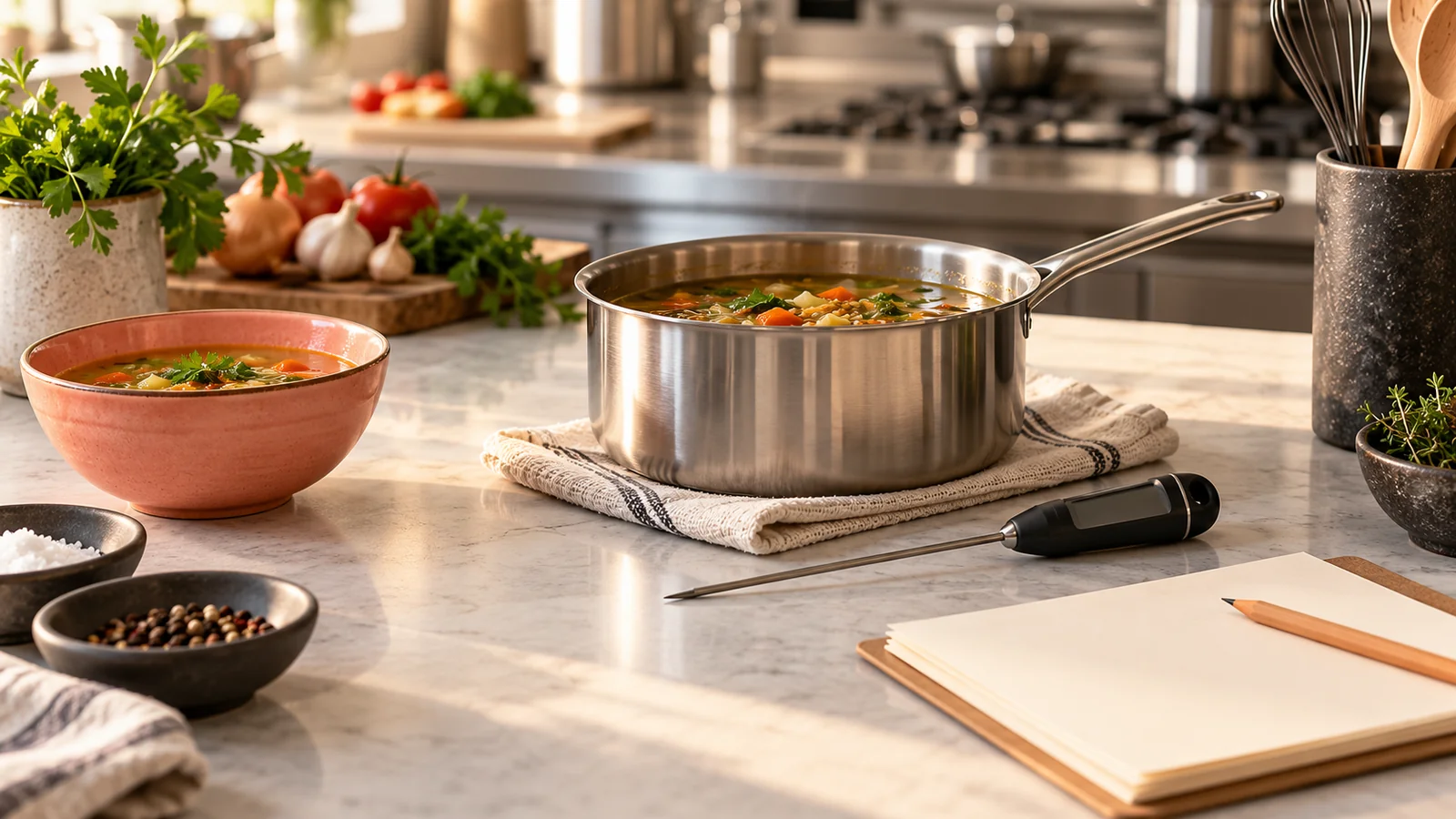
HACCP is a systematic approach to identifying significant food safety hazards and controlling them during a process. It stands for Hazard Analysis and Critical Control Point. In a restaurant kitchen, it means being able to explain the hazard, the control and the action taken when that control fails, rather than simply filling in temperature boxes.
Scope: Restaurant and café kitchens in Türkiye. This is an explanatory guide, not a professionally validated HACCP plan for a particular business or a guarantee of food safety.
Does applying HACCP mean buying a certificate?
Article 22 of Türkiye’s Food Hygiene Regulation requires covered food businesses operating after primary production to establish and maintain HACCP-based procedures. It does not establish a general requirement for every restaurant to buy a private “HACCP certificate”. Third-party certification is a separate matter; check customer, tender and contractual requirements individually. Food Hygiene Regulation, Article 22.
Before buying certification, ask which activities and premises it covers and what the assessment demonstrates. See our restaurant documents and certificates guide for the broader distinction. A course attendance certificate does not demonstrate that kitchen controls operate in practice.
Build the prerequisite programmes first
Prerequisite programmes provide everyday foundations: potable water, personal hygiene, cleaning and disinfection, pest control, equipment maintenance, supplier checks, prevention of cross-contamination and allergen management. Give each task an owner, a method and a record. A HACCP folder cannot compensate for dirty equipment. Codex CXC 1-1969, good hygiene practices sections.
For example, separate raw-poultry equipment from ready-to-eat salad equipment; store cleaning chemicals away from food; have kitchen and service staff update allergen information when a sauce changes. These are this guide’s practical examples. Do not automatically label every task a critical control point.
Start hazard analysis with the actual workflow
Bring together the chef, purchasing/storage and service leads, with competent food safety expertise where needed. Describe the food, ingredients, intended consumers and service method. Map receiving → storage → preparation → cooking → cooling/reheating if applicable → service, and check it on site during a busy shift. FAO: flow diagrams and on-site confirmation.
At each step consider biological hazards such as pathogen growth, chemical hazards including detergent residues and allergens, and physical hazards such as fragments from damaged equipment. Likelihood, severity of health effects and existing controls help identify which hazards are significant. FAO: conducting a hazard analysis.
Turn the seven principles into decisions
- Hazard analysis: Identify significant hazards that need prevention, elimination or reduction to an acceptable level.
- Critical control points (CCPs): Identify and justify steps where control is essential.
- Critical limits: Validate measurable or observable boundaries between acceptable and unacceptable conditions at each CCP.
- Monitoring: Specify who checks what, by which method and how often.
- Corrective action: Define action for both the process and the affected food.
- Validation and verification: Establish why the controls should work and how their continuing operation will be checked.
- Documentation and records: Retain traceable decisions, readings, deviations and product dispositions.
See Codex CXC 1-1969, sections 17–19. Not every temperature check is a CCP: good hygiene practices may control some hazards; CCP selection follows the hazard analysis. FAO: determining CCPs.
Worked example: cooling cooked soup
Illustration only: Assume cooked soup will be used at a later service. Whether cooling is a CCP cannot be decided for a real product without assessing equipment, batch volume, recipe, storage and subsequent use.
- Process: Controlled cooling after cooking, followed by refrigerated storage.
- Hazard: Microbial growth and, depending on the food, toxin formation during unsuitable cooling.
- Control: A cooling method validated for the operation, suitable containers/batch size and adequate equipment capacity, with product-specific time–temperature criteria.
- Monitoring: A trained operator measures actual food temperature and time at defined points using a clean probe whose accuracy has been checked, recording the batch identity. The refrigerator display alone is insufficient.
- Correction: Isolate a deviating batch from service, inform the responsible person and assess it under the written procedure. Do not assume reboiling makes it safe without competent assessment. Do not serve food whose safety cannot be demonstrated; address the process cause too.
- Record: Date, batch, quantity, container/equipment, basis of the criterion, times, readings, operator, deviation, product decision and reviewer.
No universal temperature or number of minutes is prescribed here. Critical limits require competent validation using applicable legislation, reliable scientific evidence and the actual food/process conditions. FAO: establishing and validating critical limits. Assess applicable Turkish microbiological criteria separately; the Ministry’s published 2025 Regulation, Articles 5–6 explains their relationship with hygiene and HACCP procedures.
Keep the system alive
Managers should check that records are completed during the shift and deviations are resolved. Probe accuracy checks, observation and appropriate testing where necessary can support verification; tailor methods and frequency to the business. Review the system after recipe, equipment, supplier or service changes. FAO: validation and verification.
Train staff with a real measurement task and a deviation scenario: “What would you do if this batch failed the limit?” Training for personnel responsible for HACCP procedures is addressed in Article 21 of the Food Hygiene Regulation. Use our restaurant inspection preparation checklist to organise the supporting evidence.
Dates and sources: Displayed publication: 6 October 2026, 09:00 UTC. Actual source check: 26 October 2026. The Codex reference is the FAO/WHO 2023 publication incorporating the 2022 revisions. The Official Gazette link is the Regulation’s originally published text; the consolidated legislation portal could not be opened during this check. This is not a claim that every amendment has been verified. Confirm current business-specific scope with Türkiye’s provincial/district Agriculture and Forestry Directorate, and technical plans and limits with a competent food safety professional.