How do you prepare calorie information for a menu?
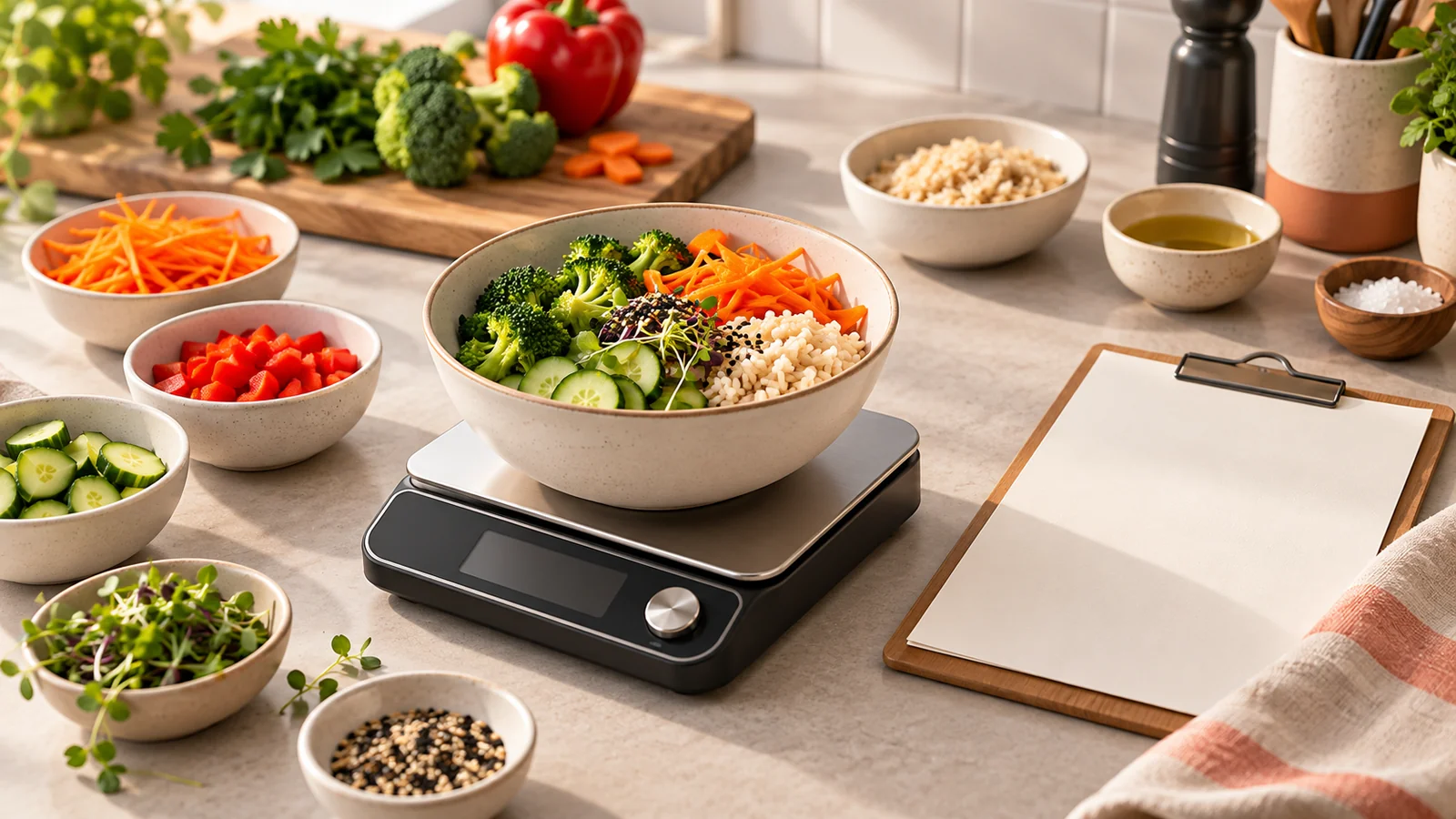
To prepare menu calorie information, define a standard recipe and serving size, match each ingredient’s net edible weight to suitable food composition data, measure the cooked yield and allocate total energy to portions. This workflow is for restaurants and cafés in Türkiye. Copying a calorie figure found online for a dish with the same name does not validate your recipe.
Scope: This article covers calculation preparation. For the timetable by business type, see our guide to calorie and ingredient disclosure in Türkiye. The Ministry’s announcement of 13 March 2026 describes the addition of food service ingredient and energy provisions and a worked example to its guidance. Official announcement. Energy calculation does not replace allergen assessment.
1. Establish the recipe first
Record a recipe code, version date, ingredient and brand, purchased weight, trimming waste, net edible grams, added water and oil, cooking method, finished weight and serving weight. State whether sauce, garnish, bread and drinks are included or separate. Calculate small, large and extra-sauce options separately.
Purchased weight includes everything bought; edible weight is what actually enters the recipe after peel, bones or unused parts are removed. In a hypothetical example, 1,000 g of vegetables with 200 g of trimming waste provides an 800 g calculation input. Tare the scales and repeat measurements in the kitchen. Do not treat purchased kilograms as edible grams.
2. Match the data to the ingredient
TürKomp, Türkiye’s national food composition database, is a starting point; check its commercial use conditions. Obtain current labels or technical specifications for branded products. Store the source, food code, access date, per-100 g or per-100 ml basis and raw, cooked or drained state. Keep the same documentation when another database is needed.
Do not multiply raw rice weight by data for cooked rice. Distinguish drained food from food including its packing liquid. Use an appropriate density to convert millilitres to grams; do not assume every liquid weighs 1 g/ml. Flag missing data and resolve the gap instead of treating it as zero.
3. Measure cooking yield and losses
Cooking yield is cooked edible weight divided by the defined starting weight. Record whether added water is included in that starting weight. Nutrient retention describes the fraction of a nutrient remaining after processing; it is different from weight yield. FAO/INFOODS, recipes section.
Weigh the entire ready-to-serve batch after subtracting the empty pan’s weight. Water gain or evaporation changes energy per gram; drained fat, absorbed frying oil and sauce left behind can also change total energy. FAO, calculation of prepared dishes. Weight change alone cannot identify these effects. Do not combine raw-data cooking adjustments with already appropriate cooked data and deduct the same loss twice.
4. A hypothetical batch calculation
The following numbers are chosen only to demonstrate arithmetic. They are not measured TürKomp values, an actual recipe or laboratory results. Assume all energy-bearing ingredients remain in the dish, only water is lost and the batch is mixed evenly:
- 400 g net dry grain × 350 kcal/100 g = 1,400 kcal.
- 800 g net vegetables × 30 kcal/100 g = 240 kcal.
- 40 g oil × 900 kcal/100 g = 360 kcal.
- 760 g water × 0 kcal/100 g = 0 kcal.
The starting weight is 2,000 g and energy totals 2,000 kcal. If the finished batch weighs 1,600 g, yield on this water-inclusive basis is 1,600 / 2,000 = 0.80, or 80%. Energy density is 2,000 / 1,600 × 100 = 125 kcal/100 g. A 200 g portion contains 250 kcal and the batch makes eight equal portions. A 240 g serving contains 300 kcal. If fat or solids are actually lost, the simplified total must be recalculated.
5. Distinguish kJ and kcal calculations
In everyday nutrition language, calories usually means kilocalories (kcal). The unit conversion is 1 kcal = 4.184 kJ: in this example, 250 kcal × 4.184 = 1,046 kJ. FAO, unit conversion. This teaching example converts units; it is different from calculating legally declared energy from nutrients.
When calculating from nutrients, consider energy-bearing constituents such as fibre, polyols and alcohol alongside protein, fat and carbohydrate. Do not add them again when using a source’s already calculated energy value. TürKomp energy methodology. Have an expert check the applicable conversion factors, units and presentation for Türkiye against Article 36 and relevant annexes of the regulation. A kJ figure converted from rounded kcal may differ from one calculated with separate nutrient factors.
6. Verify before release and revise after changes
- The kitchen lead checks the recipe, finished weight and serving weight across production runs.
- A food engineer and/or dietitian reviews data matching, cooking adjustments, arithmetic and the disclosure format applicable in Türkiye within their competence. Do not finalise values while data are missing.
- Where necessary, commission a competent laboratory using a suitable method and sampling plan. Interpret results for the product and conditions they represent.
- The business retains recipe versions, source files, calculation sheets and the reviewer’s name and date, then updates printed menus, digital menus and branch information together.
The teaching example could read: “Per portion (200 g): approximately 1,046 kJ / 250 kcal; calculated from a standard recipe.” This line alone does not establish that every disclosure requirement is met. Reassess the calculation when the recipe, supplier, serving size or cooking method changes. This article is not personal dietary advice, a laboratory report or binding expert approval. Technical verification of a real product belongs in the business’s own process.
Sources and review date
Sources checked: 26 October 2026. Displayed publication date: 12 September 2026. The review has not been backdated. Sources are linked beside the relevant points: the Ministry announcement, TürKomp, FAO/INFOODS and the Official Gazette. The current guidance link on KAYSİS could not be opened during this check; the scope of the amendment was verified through the accessible Ministry announcement. Review the current guidance separately for the business’s specific presentation and compliance assessment.