Seasonal restaurant menu planning: From supply to trial service
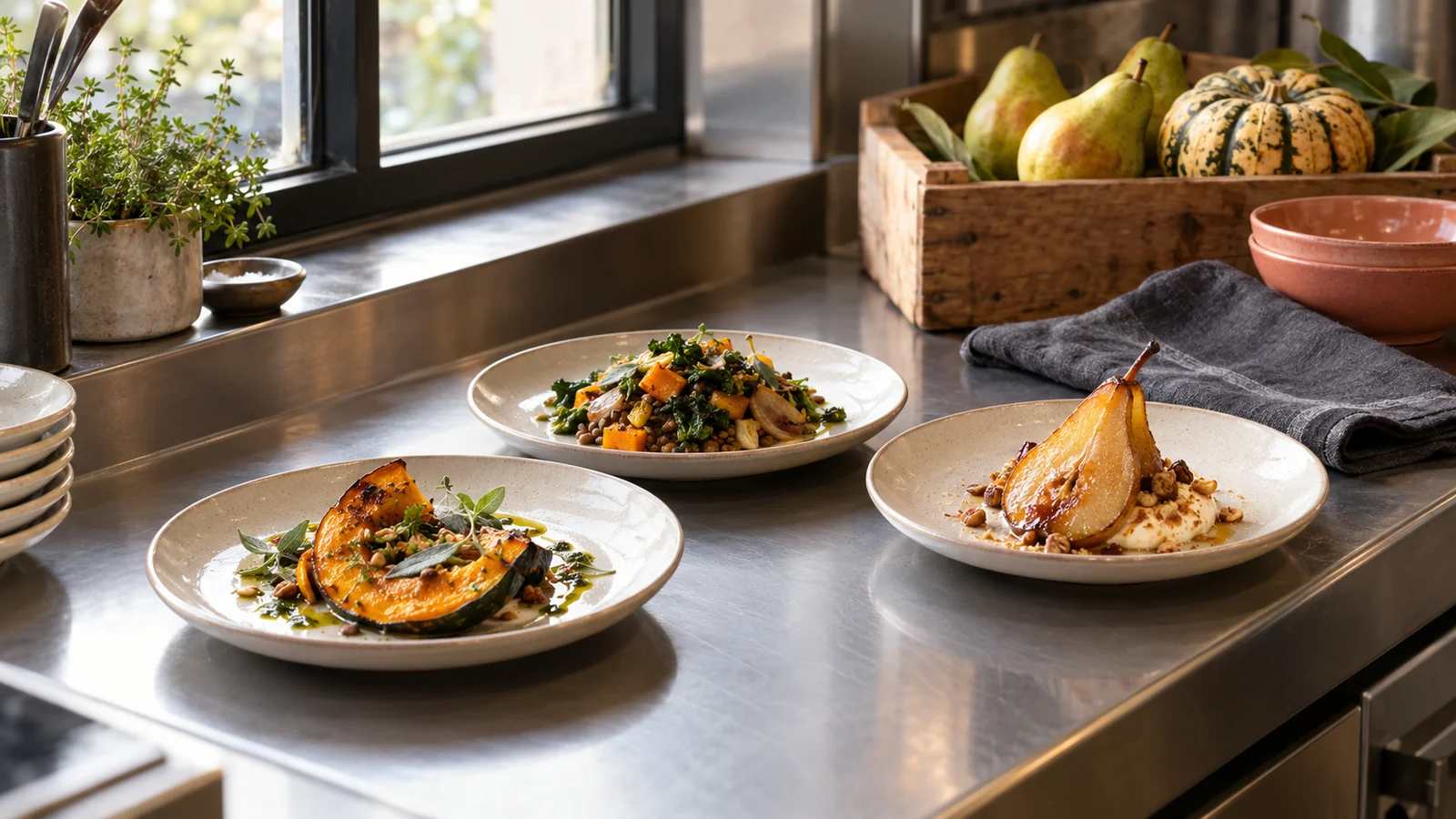
Seasonal restaurant menu planning starts with the quality, continuity of supply and cost per saleable portion of the produce reaching your branch. Match these findings with customer demand and kitchen capacity, then finalise the menu after a small trial service. The example below turns a seasonal decision into purchasing, recipe and service steps.
1. Verify the season in your branch’s region
Seasonal availability depends on local conditions; Alliance Bioversity International–CIAT stresses that calendars are specific to their study locations. Do not apply one region’s harvest calendar to all of Türkiye. Ask suppliers about the production area, outdoor or protected cultivation, stored produce and transport conditions.
First identify the successful items to retain from your current menu. Compare new candidates against sales records, reservations, customer feedback and production capacity per service. Hot weather, holidays or a local event may change demand; the same period last year is only a starting point. Adjust it using this week’s actual sales.
2. Create a short supply card for each candidate
- Product and quality: Variety, size, ripeness, acceptance/rejection criteria and usable quantity.
- Source and delivery: Production area, supplier, order deadline, delivery days and minimum order.
- Price and capacity: Quote date, unit, cost including transport, quote validity and storage space.
- Fallback decision: A second supplier or a previously tested substitute; the person responsible for stopping sales if quality or delivery conditions fail.
Linking orders to stock and expected demand is among the Spanish agriculture ministry’s operational recommendations for restaurants. Use this as a planning approach, not Turkish law. A cheap crate can produce an expensive plate if usable yield is low or the minimum order is excessive. Update the card using actual delivery acceptance records.
3. Move recipe costing from purchased kilos to served portions
Entirely hypothetical example: Suppose 5 kg of squash costs TRY 300. After trimming and cooking, you measure 3 kg of serveable produce. At 150 g per portion, this provides 20 portions; the squash costs 300 / 20 = TRY 15 per portion. If the other recipe ingredients cost TRY 12 per portion, direct ingredient cost is TRY 27. Serveable yield is 3 / 5 = 60%; this illustrates a measurement, not a standard squash yield.
The TRY 27 excludes labour, energy, packaging, overheads, tax and target profit. Do not use it as a selling price. Weigh the same recipe at the same portion size again when a product or supplier changes. Record trimming, cooking losses and unsold production separately; do not charge for the same loss both through yield and an additional waste allowance.
4. Treat substitution as a recipe and allergen change
In Türkiye, mass catering establishments must provide customers with allergen information; see the Ministry of Agriculture and Forestry’s explanation. Changing an ingredient changes more than flavour. Yoghurt sauce contains milk; replacing it with tahini sauce introduces sesame and does not automatically create a safe alternative.
Obtain the new product’s label and technical information; include sauces, garnishes and prepared mixes in the recipe. The kitchen lead and the person competent in food safety at the establishment should assess allergen cross-contact from shared equipment and preparation areas for that specific workplace. Before the first sale, the recipe version, allergen record, printed/digital menus and service team’s information must reflect the same change. The guide to the 14 allergens and menu examples explains this check further.
5. Make the trial service a decision gate
- Before the trial, the chef and manager should write down portion weight, service-time target, ingredient-cost ceiling and acceptable quality. These are the business’s own thresholds.
- Plan a limited service of, for example, 20 portions. Record the time, portions prepared/sold/remaining, waste and its cause; keep customer comments separate from actual sales.
- Observe plate dispatch, equipment bottlenecks and garnish preparation during a busy service. A tasting-table result alone is insufficient.
- Decide to “accept”, “change the recipe and retest” or “exclude from the menu”. Record the owner, reason and review date.
6. Example menu plan: A controlled start with three dishes
This is not a local harvest calendar. The example assumes the branch has verified squash, pears and other ingredients through its supply cards.
- Starter: Roast squash with yoghurt sauce. Use 150 g squash; fix sauce and garnish weights in the recipe. The recipe contains milk. Confirm supply and run a 20-portion trial; if successful, offer it as a limited seasonal dish.
- Main: Lentil and vegetable plate. Dried lentils are a core stock item; change the vegetable mix only through a tested recipe and allergen check. Recalculate portion cost after every change.
- Dessert: Baked pear with yoghurt. Check pear ripeness and portion yield on delivery; the recipe contains milk. Adding walnuts requires a separate recipe and allergen update, not an unannounced addition during service.
These are not complete allergen declarations; prepare final disclosures from all ingredients and supplier information. For each dish, complete “sales start / supply confirmation / recipe version / cost / trial result / owner / review date”.
7. Adjust purchasing after the trial
Hypothetically, if you expect to sell 40 squash portions before the next delivery and use 150 g serveable squash per portion, you need 6 kg. With measured yield of 60%, this equals 10 kg purchased. If usable stock is equivalent to 2 kg raw produce and no timely delivery is confirmed, the basic order is 8 kg. Set safety stock separately according to delivery uncertainty and safe use period; do not add an automatic percentage.
Calculate needs, stock and confirmed deliveries in the same unit. Do not buy quantities you cannot safely use within their shelf life simply because they are discounted. Use the FIFO and FEFO guide to manage dates and use priorities. Scale production to current sales; having a product in stock does not create demand by itself.
Final check before service
- Are supply and fallback plans confirmed?
- Do recipe, portion, yield and cost share the same version?
- Are allergen information, team training and all menu channels up to date?
- Were the trial’s quality and service-time results accepted?
- Are order quantity, safe storage capacity and a review date set?
If supply stops or quality misses its target, temporarily remove the dish from sale. Approve changes and give customers accurate information before serving a substitute under the same menu description.