The 14 allergens restaurants must declare in Türkiye, with menu examples
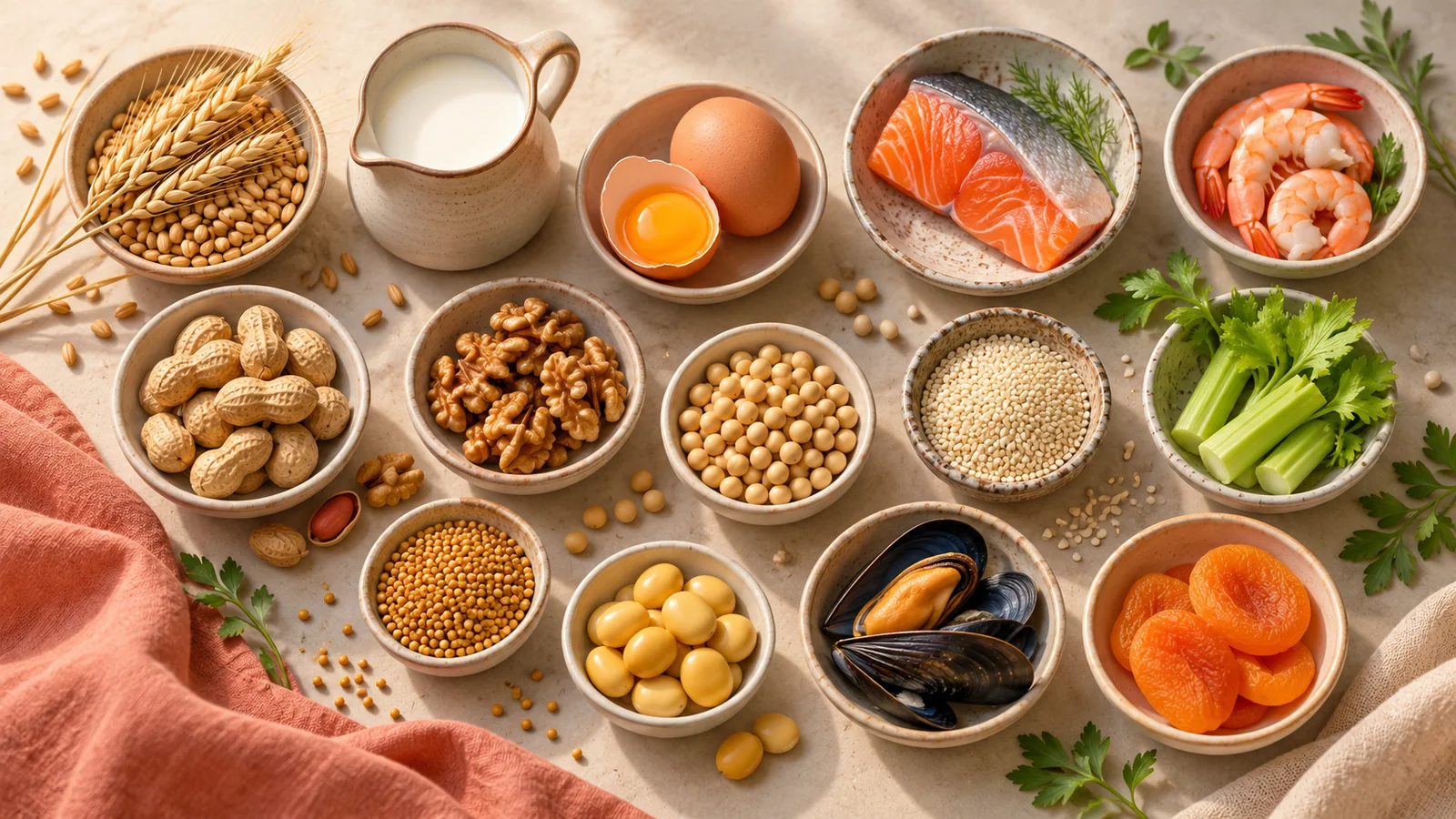
Restaurants and cafés in Türkiye must inform customers about regulated allergens in the food they serve. Start with the current recipe and supplier information for every ingredient, rather than the dish name. The Ministry states that this obligation has applied to mass catering establishments since 1 January 2020 and that menus, posters or boards can carry the information. Ministry explanation. This guide concerns Türkiye, not the rules of other countries.
The 14 groups covered
The groups and sulphite threshold are summarised from the Ministry list and Annex 1 of the Regulation.
- Cereals containing gluten and their products: wheat (including spelt and kamut), rye, barley, oats and their hybrid strains. Identify the cereal used, for example wheat.
- Crustaceans and their products, such as prawns, crabs and lobsters.
- Eggs and egg products.
- Fish and fish products.
- Peanuts and peanut products, a separate group from tree nuts.
- Soybeans and soybean products.
- Milk and milk products, including lactose.
- Nuts and their products: almonds, hazelnuts, walnuts, cashews, pecans, Brazil nuts, pistachios, macadamia and Queensland nuts. Specify the nut used.
- Celery and its products.
- Mustard and its products.
- Sesame seeds and their products, including tahini.
- Sulphur dioxide and sulphites above 10 mg/kg or 10 mg/L, calculated as total SO2 in the product ready to eat or reconstituted according to the manufacturer’s instructions.
- Lupin and its products. Lupin is not the same plant as broad bean.
- Molluscs and their products, such as mussels, squid and octopus, a separate group from crustaceans.
Specific Annex 1 exemptions
These limited exemptions are summarised from official Annex 1 and its footnote. An exemption does not establish that an entire dish is safe or allergen-free.
- Cereals: excluded products are wheat-based glucose syrups including dextrose; wheat-based maltodextrins; barley-based glucose syrups; and cereals used to make alcoholic distillates, including ethyl alcohol of agricultural origin.
- Fish: fish gelatine used as a carrier for vitamin or carotenoid preparations; fish gelatine or isinglass used as a fining agent in beer and wine.
- Soybeans: fully refined soybean oil and fat; natural mixed tocopherols (E306), natural D-alpha tocopherol, its acetate and succinate derived from soybeans; plant sterols and sterol esters from soybean vegetable oils; plant stanol ester produced from vegetable oil sterols from soybeans.
- Milk: whey used to make alcoholic distillates, including ethyl alcohol of agricultural origin, and lactitol. This does not automatically exempt ordinary whey in a dessert or lactose-free milk.
- Nuts: those used to make alcoholic distillates, including ethyl alcohol of agricultural origin.
- The Annex 1 footnote also covers derivatives of the marked wheat glucose syrups, wheat maltodextrins and fully refined soybean oil, provided processing does not increase allergenicity. Confirm an exemption against product specifications; do not extend it to soy sauce or all cereal products. Annex 1 lists no specific excluded products for the other groups; the sulphite threshold above applies.
How to show information on a menu
The following are illustrative statements only. They are not verified commercial recipes or complete allergen assessments. Do not copy them directly into your menu. Check the actual recipe, including sauces, garnishes, coatings, oils and ready-made mixes.
- Wheat soup with yoghurt: if the assumed recipe contains wheat and yoghurt, “Contains wheat (gluten) and milk.” Stock or mixes may introduce additional allergens.
- Tahini and walnut dessert: if it contains tahini and walnuts, “Contains sesame and walnuts.” Include wheat, milk or eggs too if the actual recipe uses them.
- Prawn and egg noodles: for an assumed recipe of wheat noodles, eggs, prawns and soy sauce, “Contains wheat (gluten), eggs, crustaceans (prawns) and soy.” Check the sauce label for other allergens.
- Mustard yoghurt dressing: if it contains yoghurt and mustard, “Contains milk and mustard.” If using icons, provide a clear key and link them unambiguously to each dish. A generic poster listing 14 allergens does not replace current records identifying what each dish contains.
Checklist when a recipe or supplier changes
- Record the change: dish, branch, recipe version, date and responsible person. Treat temporary substitutions as changes too.
- Obtain the new product’s full label, specification and allergen declaration; do not rely on old packaging or the brand name alone.
- Break down compound ingredients: check the components of sauces, stock, bread, spice mixes, decorations and garnishes against the recipe.
- Reassess all 14 groups for each dish; verify exemptions and the sulphite threshold using documentation. Never interpret missing information as absence.
- Assess cross-contact during storage, shared frying, equipment use, preparation and service. Record intentional ingredients separately from unintended contact risks.
- Update printed menus, QR menus, takeaway and ordering channels together before selling the new recipe. Brief both kitchen and service teams.
- Have a competent responsible person check the result; keep supplier evidence, recipe version, approval and publication date. Resolve issues needing a food engineer before claiming a dish is safe or allergen-free.
A “contains” statement identifies an allergen in the recipe; “may contain” cannot replace it. Blanket cross-contact warnings on every dish do not substitute for risk management or accurate information. This guide provides no allergen-free guarantee, personal medical advice or business-specific compliance approval. The ingredient and energy disclosure introduced in 2026 must be considered separately from the existing allergen obligation. Ministry announcement of 30 June 2026.
Sources and dates
Displayed publication date: 10 September 2026, 09:00 UTC. Sources last checked: 26 October 2026; no claim is made that this review occurred on the publication date. The Regulation was published on 26 January 2017; the Ministry gives 1 January 2020 as the start of mandatory allergen information in mass catering. The current KAYSİS guidance link returned a redirect loop during access, so this article makes no additional claims based on an unverified version.
- Ministry of Agriculture and Forestry: the 14 allergens and the start of mandatory catering information
- Turkish Food Codex Regulation on Food Labelling and Consumer Information, Annex 1 (official Ministry copy)
- Ministry: ingredient and calorie information in catering, 30 June 2026
Related reading: Calorie and ingredient disclosure in Türkiye.