Which risks should restaurant insurance assess?
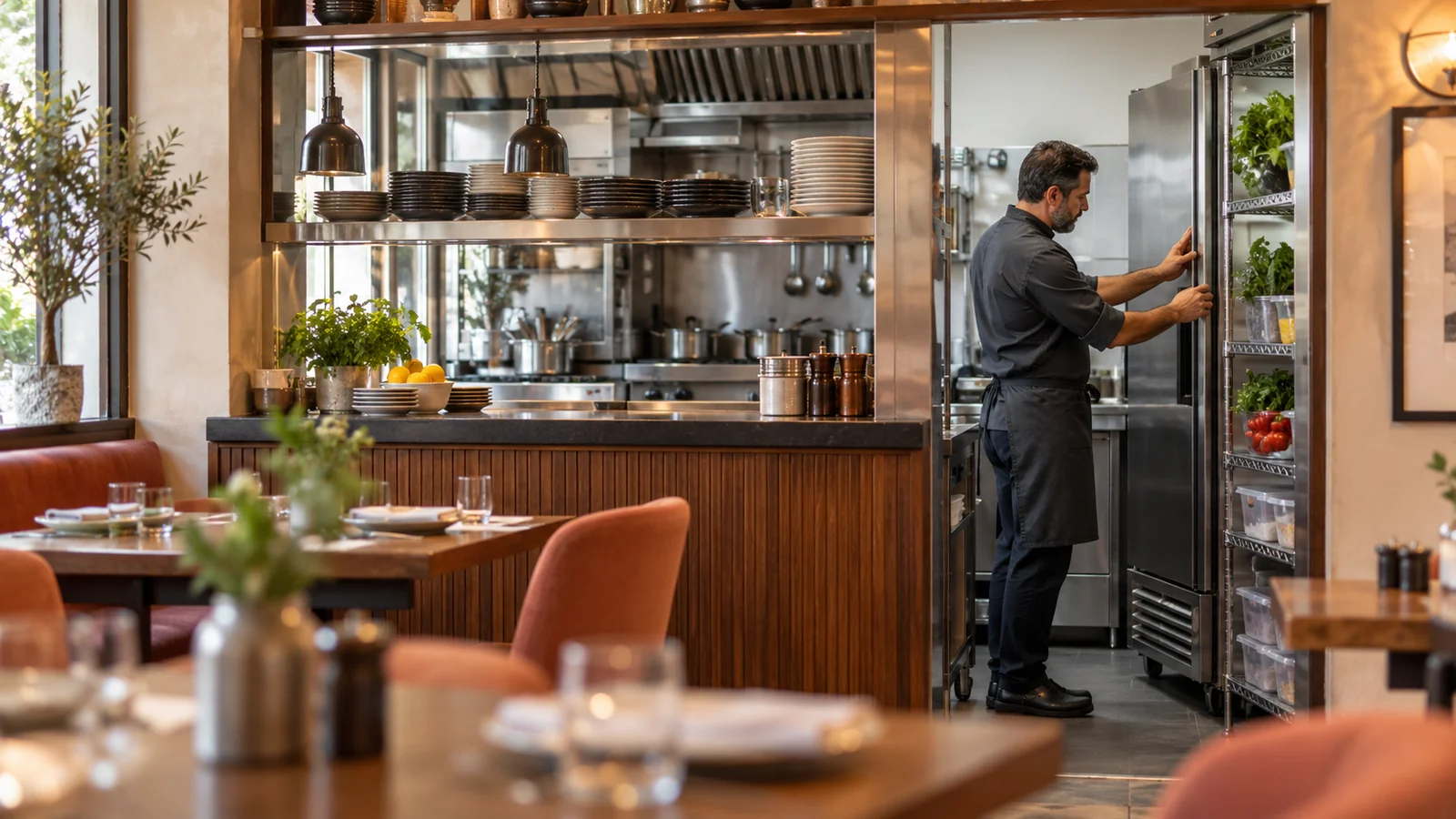
Prepare for a restaurant insurance discussion with scenarios for fire, refrigeration failure, harm to customers or employees, data loss and interrupted trading, as well as building and equipment values. Ask in writing which assets or liabilities are protected, by which event, on what terms and for how much. In Türkiye, the name of a business insurance package does not establish that all these risks are covered.
Start with a risk inventory for the business
Create a separate sheet for each branch. Record the address, operating legal entity, activities, tenant/owner status, building use, kitchen fuel, seating area, storage, terrace and delivery activities. If the operator, landlord and equipment owner differ, identify whose interest is to be insured. Distinguish a lease requirement from a statutory insurance duty.
- Assets: Separate the building from tenant improvements; list kitchen machinery, POS equipment, furniture, stock and equipment belonging to others. Record normal and peak seasonal stock values, invoices, serial numbers and the basis of current valuations.
- Operations: Note extraction ducts, electrical and gas installations, flood-exposed basements, cold storage and reliance on a single supplier. Attach maintenance and protection records.
- People and services: Record staff numbers and tasks, customer areas, allergen communication, off-site catering and the delivery model.
- Digital systems and continuity: List reservation and customer data, administrator accounts, backups, payment service providers and expenses that continue when sales stop.
Connect each risk to the policy wording
Fire, water, earthquake and theft
Fire general conditions and risks added by agreement are different; do not assume flood or earthquake cover is included. Request the relevant wording for the insured location, building versus contents, methods of entry for theft, glass, cash and outdoor assets. TSB Fire Insurance General Conditions, A.1–A.4.
Refrigeration breakdown and stock deterioration
Seek three separate answers for repairing the machine, spoiled food and lost trading: How are internal breakdown, grid failure and voltage changes defined? What conditions concern poor maintenance, wear, an open door, alarms and backup power? Do not assume fire cover automatically pays for electrical faults or deterioration without a fire. TSB Fire General Conditions, A.4. Prepare temperature and quarantine records alongside your cold-chain procedures.
Customer, product and employer liability
Ask separately about a customer slipping and a claim relating to food served. Request explicit cover, exclusions and expense provisions for food poisoning, allergens, delivery, events and product recall; public liability alone does not establish cover for every product risk. SEDDK Third-Party Liability General Conditions; SEDDK Product Liability General Conditions.
Review employer liability separately for employee accidents: How are occupational disease, non-pecuniary damages, work assignments away from the premises and subcontractors treated? Employer liability insurance does not replace SGK social security duties or workplace safety. The general conditions exclude some situations unless otherwise agreed. TSB Employer Liability General Conditions, 1–3. Continue prevention with the kitchen accident prevention checklist.
Cyber incidents and external service outages
Is there separate cover for investigating a data breach, restoring systems, third-party claims and interruption caused by a cyber incident? Ask about cloud/POS provider outages, payments diverted through social engineering, backups and multi-factor authentication conditions. These are inventory questions; ordinary business or electronic equipment cover does not establish cyber protection.
Separate compulsory insurance from voluntary protection
The existence of general conditions does not make a cover legally compulsory for every restaurant. Assess business packages and optional extensions separately from duties arising from your building, vehicles and activities. Ask an authorised insurer or agent to identify the current rule and why each claimed duty applies to your business. SEDDK general conditions directory.
Under DASK, a commercial unit in a building constructed as residential accommodation differs from a wholly commercial/industrial building; the latter is outside scope. A restaurant licence alone does not decide the issue: have an authorised insurer examine the title deed, building classification and unit information. DASK does not insure stock, equipment or business interruption. DASK Compulsory Earthquake Insurance General Conditions, A.1–A.3.
The compulsory bottled-LPG liability wording addresses LPG bottling/distribution companies; the presence of a cylinder does not automatically impose that same duty on the restaurant. Hazardous substances and waste also require a separate assessment of substances and activities. If your setup involves storage, filling, sales or a different facility arrangement, have an authorised agent review the documents. SEDDK Bottled-LPG General Conditions, 1; SEDDK Hazardous Substances and Hazardous Waste General Conditions, A.1–A.2.
Compare six policy concepts together
- Cover: Which event, property, person and type of loss are insured?
- Exclusion: Which causes or situations are outside scope, and which can be included by agreement?
- Deductible: What fixed sum or percentage remains with the business, and is it calculated on the loss or the sum insured?
- Limit/sublimit: What are the per-event, per-person, product-group and annual aggregate caps? Do defence expenses use up the limit?
- Coinsurance/retained share: If the policy leaves a share with the business, what is its calculation base? Distinguish this from an arrangement shared between several insurers and record who bears each share.
- Waiting period/time excess: Distinguish any delay before cover starts from an uninsured period following an event. Record the maximum indemnity period separately.
Underinsurance is another issue: declaring less than the actual insurance value may lead to a proportional reduction in certain losses. It is different from a deductible or retained share. Request a written example of valuation and the order of calculation where several deductions apply. TSB Fire General Conditions, A.5–A.7.
For interruption, ask what triggers cover
Fire-related loss-of-profit cover requires material damage covered by the relevant fire policy and the insurer's payment or acceptance of liability. A fall in revenue or closure alone is insufficient. Cover depends on the selected risks and maximum indemnity period. TSB Fire-Related Loss of Profit General Conditions, A.1–A.4.
Obtain separate written answers for an insured fire in your kitchen, a grid outage without damage, supplier damage, restricted access and a cyber incident. What material-damage link, extension, time excess and limit applies to each? Consider rebuilding, equipment lead times and rebuilding customer demand. Reconcile the policy's gross-profit definition with your accountant; turnover is not the claim payment. A.3, A.8 and B.6.
Fill-in example: a refrigerator stops
Hypothetical planning example: A branch refrigerator stops, food is isolated from use and service pauses. This example promises neither cover nor payment.
- Event/cause: Date and time: ___; internal fault/grid failure/other according to the service report: ___; temperature and alarm records: ___.
- Separate losses: Equipment repair: ___; affected batch and stock value: ___; disposal expense: ___; interruption duration and sales records: ___.
- Policy mapping: Cover and clause for each loss: ___; exclusion: ___; deductible: ___; retained share: ___; sublimit: ___.
- Interruption: Is the required material-damage trigger met: ___; time excess: ___; maximum indemnity period: ___.
- Action: Safe isolation/food quarantine: ___; notification channel and deadline: ___; person collecting records: ___; outstanding written answer: ___.
Never return spoiled food to service to document it. Have the competent food-safety lead assess the food decision and an authorised technician assess the technical cause; securely retain photographs, batch, stock, temperature and service records.
Ten questions to bring to the policy meeting
- Are every branch, store, terrace and activity listed with the correct entity and address?
- Whose interest is insured for landlord/tenant and third-party-owned assets?
- Which general condition, special condition or clause establishes cover for each scenario?
- How do per-event, per-person, annual and shared aggregate limits operate?
- In what order are deductibles, retained shares, underinsurance and sublimits applied?
- How are machine breakdown, spoiled stock and interruption assessed separately?
- What express exclusions concern food/allergens, off-site service, employees and subcontractors?
- Which event triggers interruption cover, and what waiting period, time excess and indemnity period applies?
- What maintenance, alarm, security, backup and risk-change notification conditions apply?
- Who receives a claim, by when and with which documents; how are values updated at renewal?
Leave with a written record of cover, excluded risks, the business's retained share and the responsible person. Have uncertainties that could cause a major loss resolved by an authorised insurer or agent reviewing this premises' documents; do not reduce policy selection to a package name or total premium.