How do you protect the cold chain?
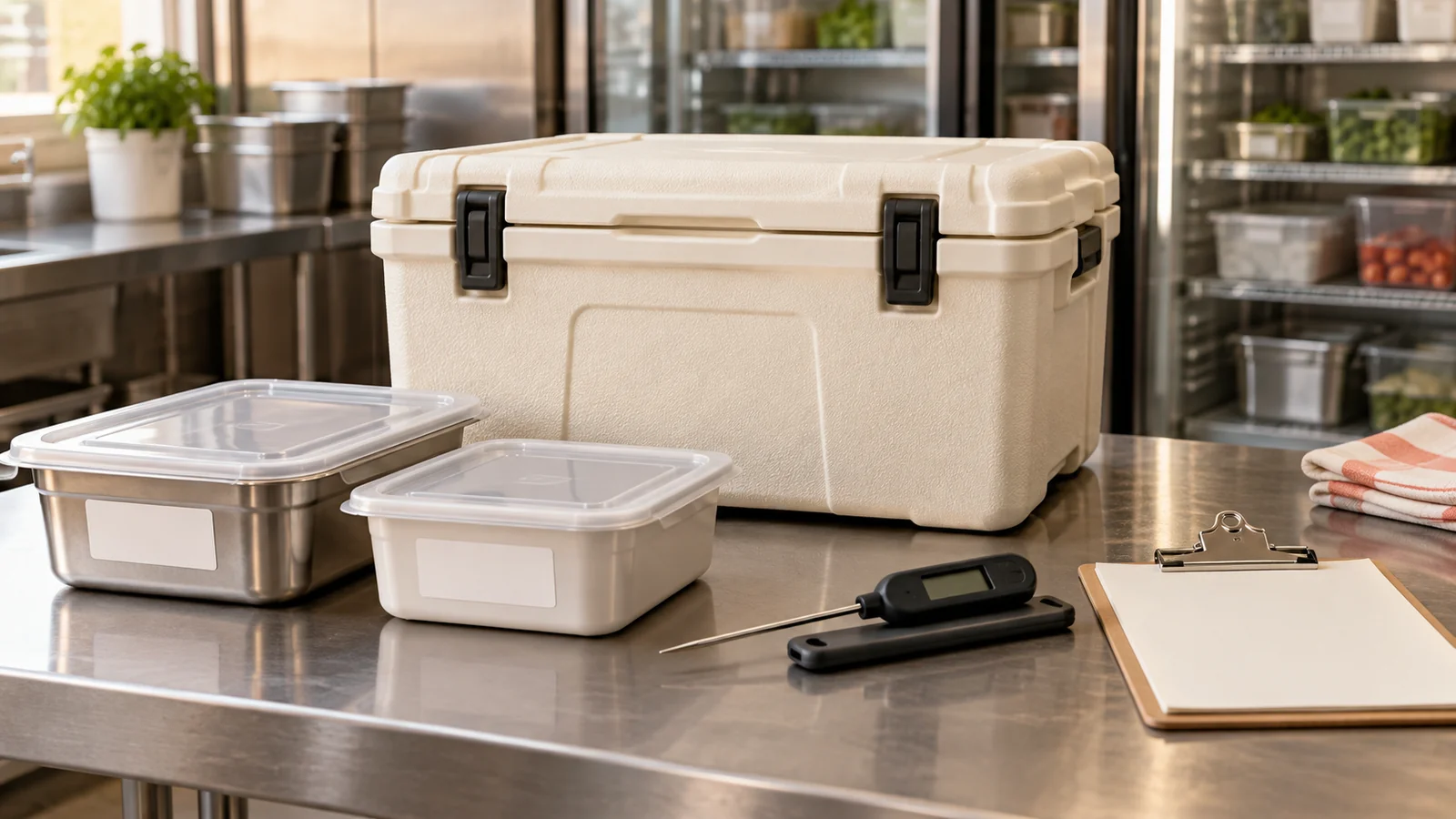
Protect the cold chain by maintaining each food’s required conditions from delivery to service. A refrigerator display alone is insufficient: know the applicable product limit, measure appropriately, record time and batch, and stop use when a deviation requires a decision.
Scope: Restaurants and cafés in Türkiye. The workflow and record below are operational suggestions to adapt, not an official form, a validated site-specific food safety plan or a safety guarantee. Have a competent food safety professional establish limits for your products and processes.
1. Define conditions for each product
Put product group, supplier, label storage instructions, instructions after opening and applicable product-specific Turkish legislation into purchasing specifications. Chilled food, frozen food and a dish made on site need separate criteria. A transport tolerance for one product is not permission for another product or for continuous storage. Resolve unclear label or regulatory conditions with the supplier and, where necessary, the provincial/district agriculture authority before acceptance.
Codex CXC 1-1969, 13.2.1 describes product-specific time–temperature control. This article therefore sets no universal temperature or duration. Connect each stage’s acceptance criterion, method, frequency and response to the establishment’s validated plan.
2. Check the vehicle, packaging and food separately
- Prepare: Make cold-storage space available and appoint a trained receiver and deputy. Protect chilled goods while checks are pending.
- Identify: Check supplier, delivery document, product, batch, quantity, use-by date, packaging integrity and transport conditions. Link vehicle records to the delivery.
- Measure: Record vehicle/room air, display readings and product measurements in separate fields. Sample different positions under the product’s sampling plan. One satisfactory pack does not establish the condition of the entire load.
- Decide: Move accepted goods promptly into suitable storage. Segregate and block goods outside limits or with an uncertain history; notify the responsible person.
The Turkish Ministry’s food-service hygiene guide, section 5.2 covers receipt checks. The record structure below is this article’s practical suggestion.
3. A display reading is not a product reading
A cabinet display represents its sensor location; food near the door, on a crowded shelf or at its centre may differ. Infrared instruments scan surfaces: reading packaging is not measuring the food’s core. Likewise, record a between-pack reading as such. Define a method suited to the food and packaging that avoids contamination; use a designated sample when needed.
Select a suitable range, accuracy, probe and response time. Clean the probe before and after use and disinfect where necessary under manufacturer instructions. Record the instrument ID. An accuracy check, adjustment and calibration against a traceable reference are distinct activities. Set methods and intervals using manufacturer guidance, risk and professional assessment; check again after a drop or doubtful reading. Remove an unsuitable instrument from use and review earlier decisions it may have affected. See the Ministry guide, sections 3.3.2 and 5.2 on calibration.
4. Manage storage, thawing, preparation and service
- Storage: Keep airflow clear and control loading and door opening. Separate raw and ready-to-eat foods and prevent drips. Mark opening/preparation dates and use periods under the product plan; prioritise suitable stock with the earliest expiry. Do not use food past its use-by date.
- Thawing: Thaw only the quantity needed under controlled refrigerated conditions specified by the label and validated plan. Record start/end, batch and use decision; keep drainage away from other foods. Do not thaw on the worktop at room temperature. Do not refreeze merely to use up leftovers or assume it is safe without manufacturer instructions and a competent product-specific assessment. WHO/FAO warning on room-temperature thawing.
- Preparation: Work in small batches and track cumulative time outside refrigeration across stages. Returning food to a fridge does not erase earlier exposure.
- Service: Verify display equipment for the food, check product temperature at planned intervals and avoid mixing new and old batches. For cooked food served cold later, use a validated cooling method and product-specific time–temperature plan. Putting a large hot pot in a fridge is not evidence of adequate cooling.
The Ministry guide, sections 6 and 9 treats storage and product groups separately; this workflow does not turn its tables into universal limits.
5. Copy this acceptance/rejection record
Complete one traceable record for the delivery and samples; mark unknown information rather than guessing:
- Date/time, branch, supplier and delivery document; product, batch, quantity and date marking.
- Label conditions; applicable product rule/specification, plan version, acceptance limit and its basis.
- Vehicle/room air and time; display reading; separate product readings, sample positions/count, method and time.
- Instrument/probe ID, accuracy-check/calibration status and operator.
- Packaging findings, deviation, and known/unknown time–temperature history.
- Accept / hold-quarantine / reject; blocked batch, quantity and location; notification time; decision maker and reason.
- Return/disposal or justified release record; corrective action, recheck and reviewer.
Example: satisfactory vehicle display, food outside limits
Entirely fictional: 15 October 2026, 08:10; branch A; supplier X; chilled ready-made sauce, batch S15, 12 tubs. Assumed product label and separately validated site specification: +2 to +4 °C. Vehicle display: +3 °C. Defined product measurements of designated samples at 08:12: +7.1 and +7.4 °C; instrument P02, accuracy check current. These figures are neither statutory limits nor advice for other foods.
The receiver segregates the delivery and blocks use. Transport history is requested; a suitable second instrument confirms the deviation without erasing the first readings. In this scenario exposure duration cannot be established, so the responsible person rejects the delivery at 08:25 and records the return and supplier correction. Cooling it down is not a reason to accept it. A real decision needs competent assessment under current legislation and the written plan.
6. During a power failure, protect and hold affected food
Record the outage start, last reliable reading, affected equipment/batches and door openings. Avoid unnecessary opening. If a planned safe transfer to suitable alternative storage is possible, record transfer times, transport conditions and product readings. Do not apply an automatic “safe for so many hours” rule to an outage of uncertain duration.
When power returns, recovered air temperature does not release the stock. Keep affected batches separate while the competent responsible person reviews history, measurements and food characteristics. Do not serve food whose safety cannot be established; document the decision, return/disposal and repair. See FAO operational control for deviation management.
Smell, taste and appearance are not safety evidence; never taste suspect food to test it. WHO/FAO safety warning. Hand over open holds, alarms and missing records between shifts. For the wider framework, see our published HACCP guide.
Dates and sources: Displayed publication: 15 October 2026, 09:00 UTC. Actual source check: 28 October 2026. The Ministry-hosted guide, FAO/WHO’s 2023 Codex publication incorporating the 2022 revisions, and the 2022 WHO/FAO factsheet were inspected. The guide does not replace current product legislation. Consolidated legislation was not fully verified in this work and the full Official Gazette text was inaccessible; no claim is made that all amendments were verified. No site-specific expert review was performed for this article. Confirm legal scope with the Turkish competent authority and limits/measurement plans with a competent food safety professional.