Reducing restaurant energy use: measurement and a consumption checklist
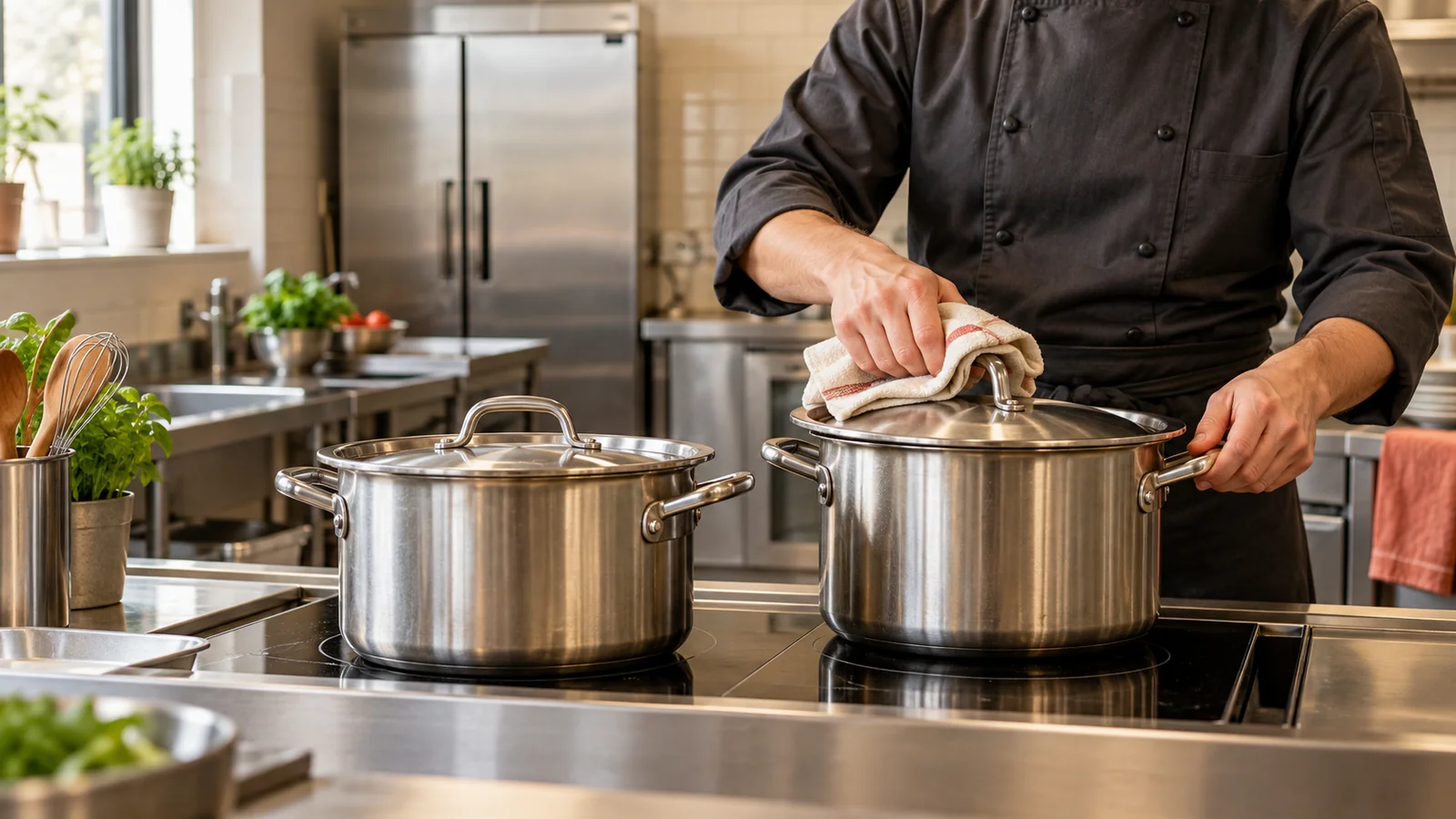
Restaurant energy savings start by making equipment use visible, rather than turning every setting down. Track bills and meter readings alongside service volume, then identify unnecessary operating hours within safe limits. This is an operating plan for restaurants and cafés in Türkiye, not an equipment adjustment manual or a savings guarantee.
1. Separate consumption from the bill amount
For recent bills, record the reading period, number of days, electricity consumption in kWh, gas consumption in the unit shown on the bill, and cost separately. kWh measures energy; kW measures power. A smaller bill alone does not prove efficiency: tariffs, weather, closed days or customer numbers may have changed. Do not simply add electricity and gas quantities together.
Create a log with the date, opening and closing times, meter reading, covers served and significant events. Define a cover consistently from the start; track takeaway separately if its share changes. Review kWh per cover and total daily kWh together. Do not rank branches with different seasons and service models as though their conditions were identical.
2. Plan equipment startup and shutdown individually
The US ENERGY STAR restaurant guide identifies unnecessary operating time and maintenance gaps as energy management opportunities. US certifications and incentives cited there are not Turkish requirements or entitlements.
With the chef, document each appliance’s first use, manufacturer-specified preparation time, last use and safe shutdown procedure. Replace “switch everything on at the start of the shift” with a sequence tied to demand. Test recipe-compatible methods such as fitted lids in a small production trial without compromising cooking outcomes. Explicitly separate refrigeration and other continuously required systems on the closing list.
3. Preserve safety limits for refrigeration and ventilation
Add complete door closure, damaged seals and blocked airflow to the observation log. The City of Portland’s restaurant checklist also recommends checking refrigeration airflow and seals; its technical advice does not transfer Portland’s local rules to Türkiye.
Do not switch refrigerators off overnight, hold food at unsafe temperatures or leave cooked food cooling at room temperature for extended periods to save energy. Türkiye’s Ministry of Agriculture and Forestry stresses maintaining the cold chain and labelled storage conditions. Establish product- and process-specific limits through your HACCP plan; see the cold-chain guide for the workflow.
Assess extraction, replacement air and gas appliances together. Reducing extraction while cooking or bypassing an interlock is not a savings measure. Leave fan, thermostat, gas, electrical and refrigerant circuit work to qualified technical personnel. Stop any trial and take corrective action if safety limits are breached.
4. Choose small, traceable tasks for washing and the dining room
The US Department of Energy’s commercial kitchen guidance recommends appropriate dishwasher loads and leak repairs. Load racks without obstructing water circulation; never trade validated sanitising temperatures, chemical doses or cycles for savings. Discuss setting changes with the service technician.
Walk the dining room by zone: decorative lights left on in daylight, conditioning beside an open door, and unused spaces. Lighting changes must retain visibility needed for cleaning and safe work, emergency lighting and electrical compatibility. Track technical maintenance with its own owner and deadline alongside the kitchen cleaning plan.
5. Worked example: turn an assumption into decision data
Entirely hypothetical example: assume an appliance has been measured drawing an average of 2 kW during unnecessary operation. Removing one such hour per day across 26 days gives 2 × 1 × 26 = 52 kWh. At an illustrative variable charge of TRY 5/kWh, that is TRY 260. Neither number is a current tariff, sector average or promised outcome.
A thermostatically controlled appliance may not draw its rated power continuously. Have qualified personnel arrange suitable measurement and use the variable rate in your own contract. Fixed charges, taxes, demand-related items and loads shifted to other appliances can make the total bill difference diverge from this calculation. Compare purchase, installation, maintenance and expected service life when evaluating replacement.
Consumption checklist: give every line an owner and evidence
- Baseline: are meter-reading dates and electricity/gas units recorded?
- Daily: are the meter, covers, operating hours and unusual events logged at a consistent time?
- Startup: does each appliance start when needed, following its instructions?
- Service: have idle-time opportunities been observed without compromising quality or safety?
- Refrigeration: are doors, seals, airflow and temperature records satisfactory?
- Washing: have loading, leaks and validated washing conditions been checked?
- Dining room: have unused lighting and conditioning been reviewed?
- Closing: are shutdown items separated from continuously operating systems?
- Maintenance: does each technical finding have a qualified owner, deadline and completion evidence?
- Weekly: are consumption per cover, total consumption and safety deviations reviewed together?
A four-week implementation plan
Spend week one measuring and mapping equipment. In week two, trial one change approved as safe, such as aligning one appliance’s preparation start with service demand. In week three, compare similar days and check temperature and service-quality records. In week four, add an effective step to shift instructions; measure longer if the result is unclear. Set targets around accountable, verifiable work rather than an unmeasured percentage.
Scope: restaurants and cafés in Türkiye. Sources last checked: 29 October 2026.